Our Story
Mountains. People. Purpose.
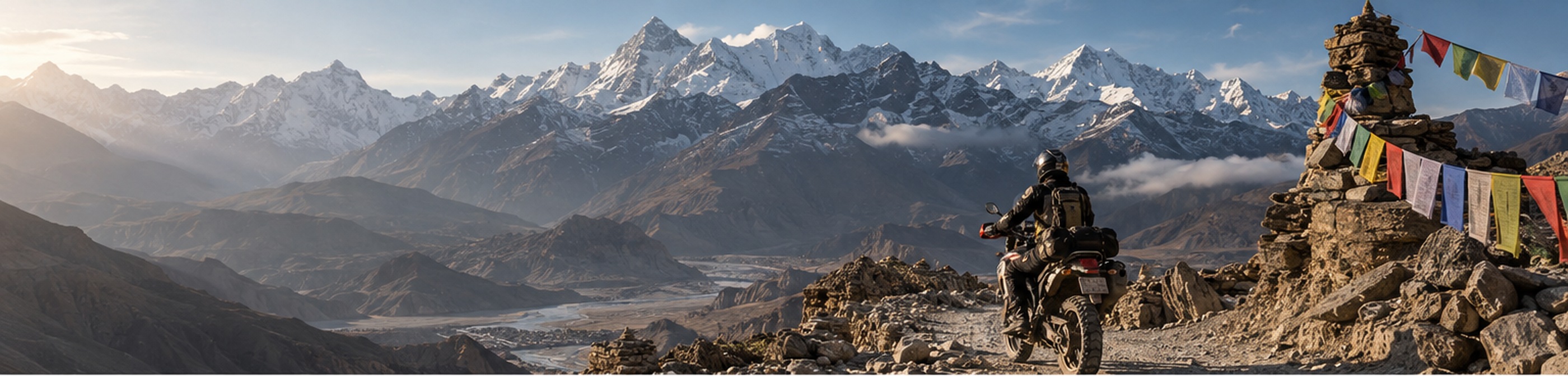
Offroad Sherpa is built around a simple conviction: the Himalaya should never be reduced to a backdrop. The best motorcycle journeys connect the road to the people, history and geography that shaped it.
The road is the thread.
We design for riders who want more than a string of viewpoints. The motorcycle creates continuity—between valleys and plateaus, historic trade corridors and modern towns, long riding days and quiet evenings. Good expedition design makes room for all of it.
Preparation is not separate from the experience. Altitude, remoteness, changing road surfaces and weather all affect pacing and judgment. ORS treats those realities as part of the product rather than as dramatic marketing.
Places with context
The Himalaya has a long memory.
Kathmandu Valley
UNESCO’s Kathmandu Valley World Heritage property is made up of seven monument zones: the Durbar Squares of Kathmandu, Patan and Bhaktapur; the Buddhist stupas of Swayambhu and Bauddhanath; and the Hindu sites of Pashupati and Changu Narayan. For ORS, Kathmandu is not an airport stop—it is the cultural threshold of the journey.
Pokhara
Nepal Tourism Board describes Pokhara as a gateway to the Annapurna region and notes its historic place on the trade route between India and Tibet. For an Upper Mustang journey, it is where the expedition begins to turn decisively toward the western Himalaya.
Jomsom & Kagbeni
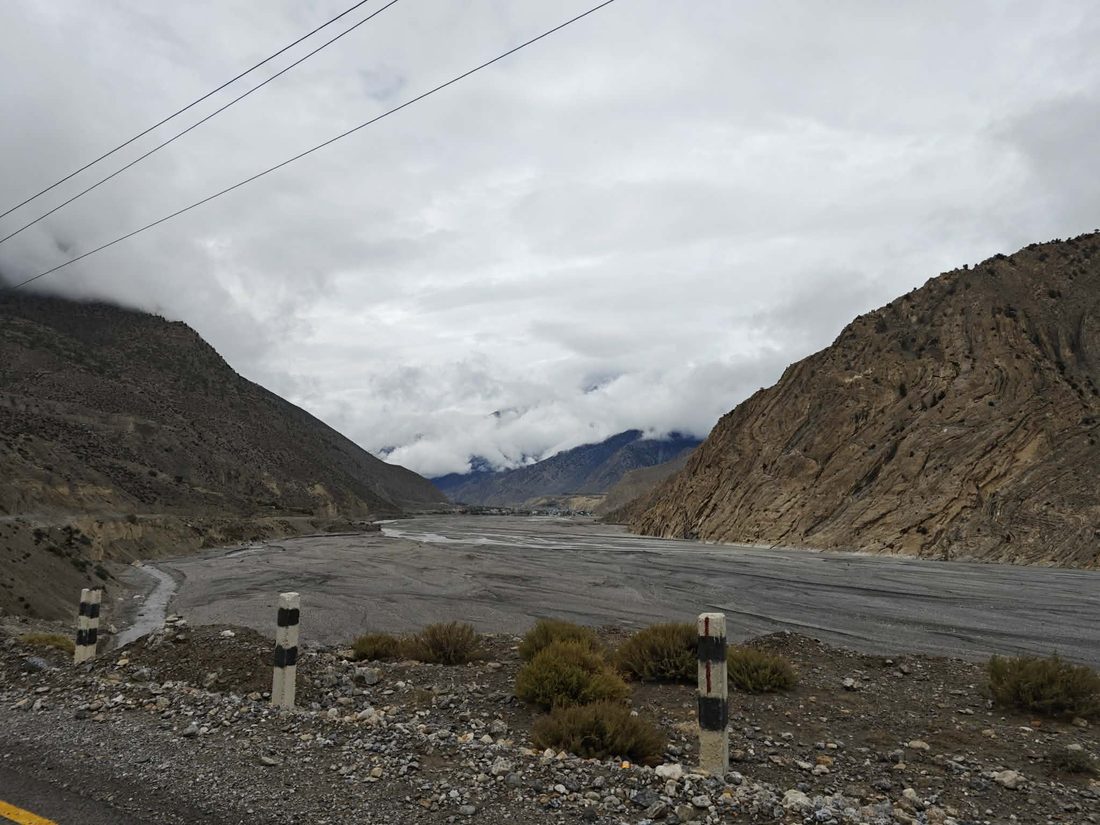
The Kali Gandaki corridor is one of Nepal’s defining north–south mountain passages. Jomsom is the principal hub of the upper valley; Kagbeni sits farther north at a strategic junction where the landscape and architecture begin to signal the transition toward Upper Mustang.
Lo Manthang & Upper Mustang
Nepal Tourism Board describes Upper Mustang as geographically part of the Tibetan plateau and identifies Lo Manthang as its old capital. The walled settlement and surrounding desert-like terrain are central to the character of the expedition, not simply the endpoint.
Paro, Punakha & Bumthang
Bhutan’s western and central valleys connect sacred sites, fortified dzongs, farming communities and forested mountain passes. Paro opens the journey; Punakha reveals a warmer river valley; and Bumthang brings the route into the country’s central cultural heartland.
Lhasa
UNESCO’s Historic Ensemble of the Potala Palace brings together the Potala, Jokhang Temple and Norbulingka. The ensemble reflects centuries of Tibetan religious, administrative and artistic history. At roughly 3,700 metres, Lhasa also plays an important practical role in a high-altitude journey.
Gyantse, Shigatse, Tingri & Everest
West of Lhasa, the scale of the plateau becomes increasingly apparent. Shigatse is one of Tibet’s major urban and religious centres; Tingri is associated with the broad high-altitude country north of the Himalayan crest. Exact ORS stops and operating roads are confirmed per departure rather than presented as fixed before permissions and conditions are known.
Our riding ethos
Premium does not mean insulated.
Small by intention
Group scale should preserve trail rhythm, flexibility and the ability to actually know the people you are riding with.
Prepared without theatre
ORS does not turn risk into marketing. Rider fit, acclimatization and operating readiness are treated with professional restraint.
Context over checklist
The places matter. The product should create enough space to understand where you are—not just collect proof that you passed through.
Explore the destination background: UNESCO’s Kathmandu Valley and Potala Palace ensemble; Nepal Tourism Board’s Pokhara and Upper Mustang. These sources describe the places, not confirmed ORS departures.